
Shade structures
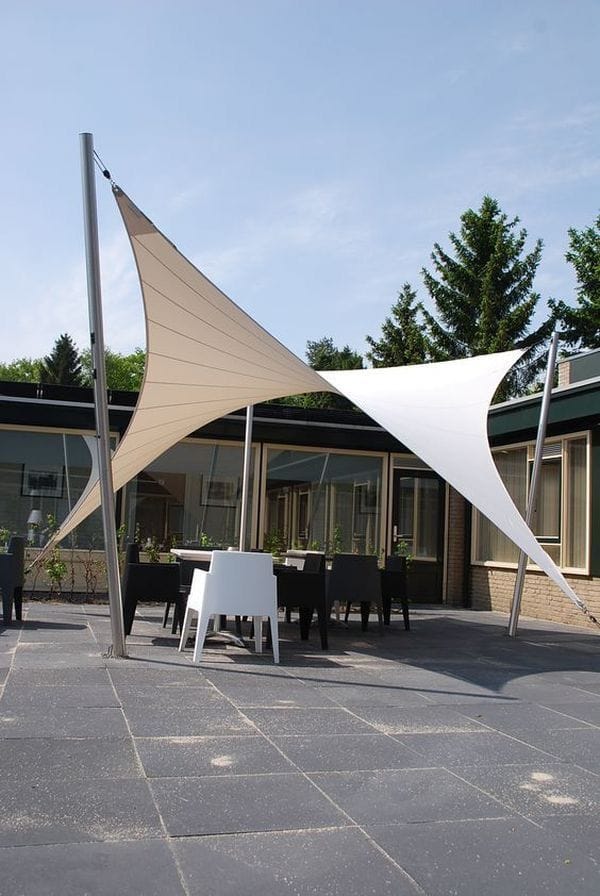
Hyperbolic paraboloid sails on slim masts — the lightest structural footprint available. Opposed curvature keeps the fabric taut, so a sail reads as a drawn line rather than a hung sheet.
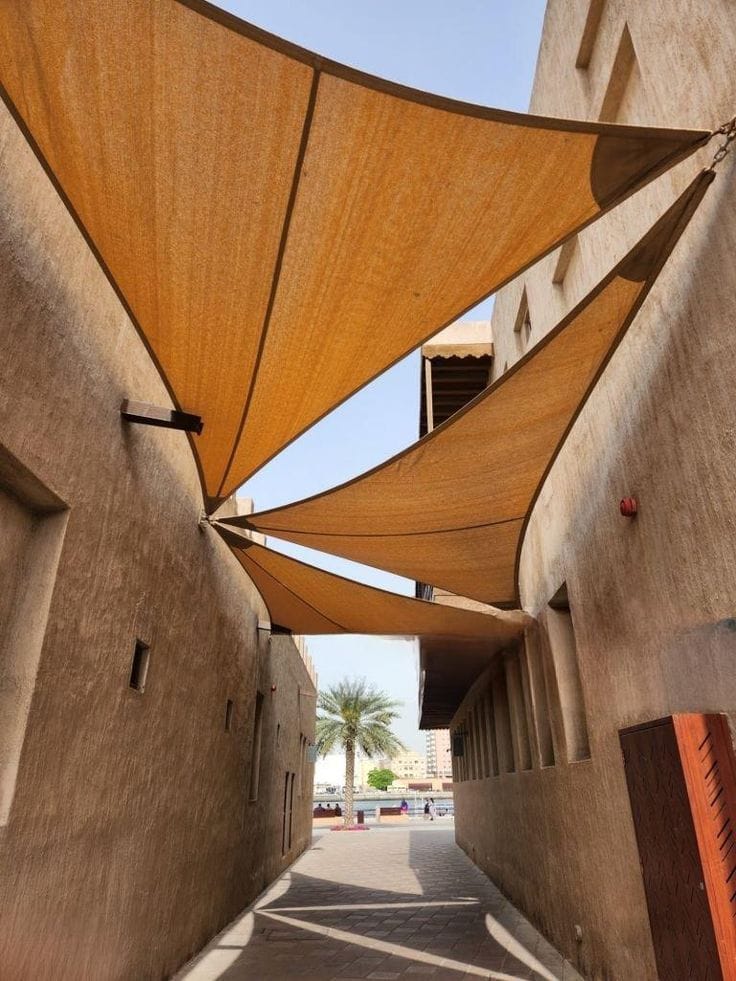
A shade sail is the lightest way to cover an area, and the easiest to get wrong. The whole effect depends on opposed curvature — two high corners, two low — which is what keeps the fabric in tension and stops it behaving like a hung sheet in the first wind.
We size masts and footings for the real uplift rather than the apparent one, because a sail is a wing before it is a shade. Rigging is stainless throughout, with turnbuckles left accessible so tension can be taken up years later without dismantling anything.
Sails suit terraces, courtyards, pool decks and villa gardens where a full frame would be visually heavier than the space can carry.
Next step
Let's design something built for your environment.
Book a site survey
